Your marketing platform was never built to scale your co-marketing
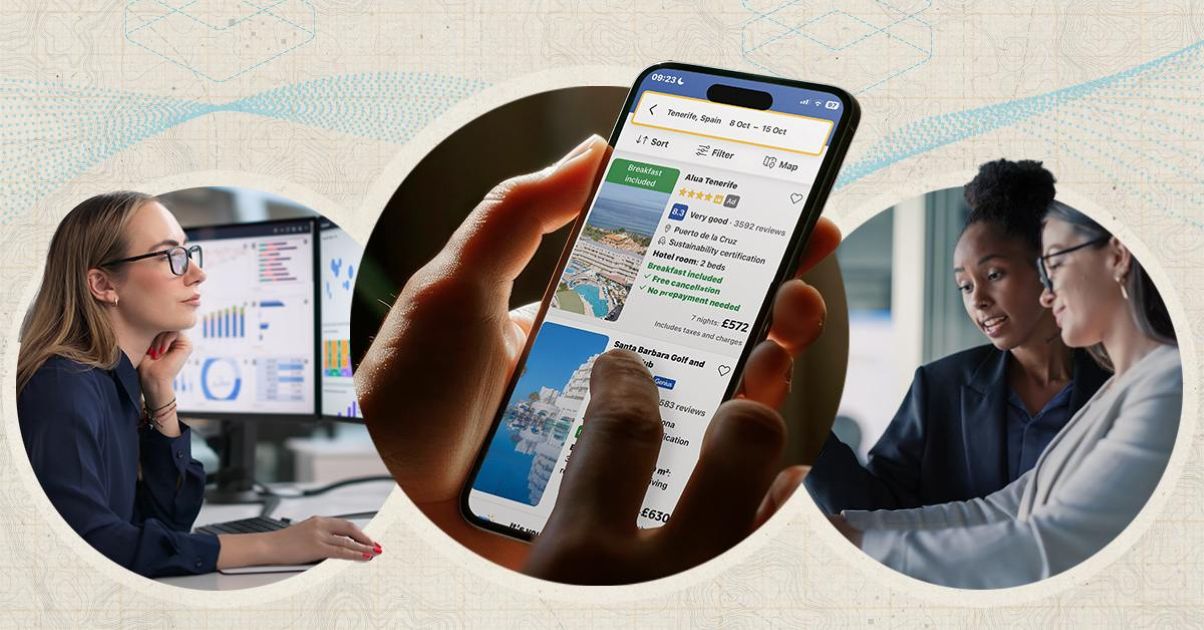
In recent years, OTAs and tour operators have invested heavily in modernising their marketing capabilities. They have unified customer data, automated campaign processes, improved creative workflows, and given teams much better visibility of performance.
Marketing teams that once relied on manual processes, disconnected systems, and support from technical teams now work faster and make much better use of customer and purchase-intent data.
As travel businesses look for new ways to grow hotel, ancillary, and partnership revenue, another challenge is coming into focus: how to monetise the digital channels they own.
Marketing to your customers and selling your media
Travel retail media gives hotel, destination and ancillary partners the opportunity to reach relevant travellers across your owned channels and, through audience extension, beyond them.
Whether your marketing is built on Adobe, Salesforce or Google, that technology plays an important role in making it possible. Customer data tells you who to reach, campaign and creative tools help you engage them, and analytics measures the outcome.
An ad server can deliver the placement. What it can't tell you is what inventory you can sell, what it's worth, which partners should have access to it, or how you manage demand and yield as the opportunity grows.
If a hotel group wants greater visibility among customers searching for a particular destination, you need to know which placements are available. When several partners want the same premium placement, you need to manage competing demand, forecast availability, deliver the campaigns and show each advertiser what its investment achieved.
When partner marketing gets left behind
Whilst travel businesses have made significant progress removing the manual work that once slowed marketing teams down, partner marketing often tells a different story.
Teams manage campaigns through spreadsheets and email chains, developers hardcode placements, and new campaigns require coordination across commercial, marketing, product and technical teams. Creative has to be reviewed and approved before anything can go live. And once a campaign runs, somebody still has to pull together proof-of-run and final reporting — often for dozens or hundreds of partners individually.
We've written before about what happens when travel retail media operations outgrow the processes underneath them. Supplier demand exists and commercial teams can see the opportunity, but disconnected systems and manual work make every additional campaign harder to manage.
As Roy Stratford, Director of Retail Media Services at Platform 195, observes:
"The interesting part is that the better your marketing operation gets, the easier this gap is to see. You know more about the traveller and you can create more relevant moments for partners, but you still need a commercial engine to turn those moments into revenue."
Sunweb provides a useful example. After simplifying its hotel co-marketing proposition and creating a scalable end-to-end process, campaigns moved from confirmed sale to live in a matter of days and hotel co-marketing revenue grew by more than 200% year on year.
Could your current setup handle ten new advertisers tomorrow?
Imagine ten hotel or ancillary partners approached your business tomorrow, each with budget to spend.
Could your teams see what inventory was available and what it was worth? Could they use purchase-intent data to put the right partner in front of the right traveller? And could they launch all ten campaigns and report back to each partner without creating ten separate operational projects?
Then comes a harder question: would you know whether you were getting enough value from the inventory you sold?
A scalable media business needs to understand which placements command a premium, which formats perform, where demand exceeds supply and where there is room to improve yield. Without that view, it's easy to prove that retail media generates revenue and much harder to know whether you're maximising the opportunity. That's the commercial layer most travel businesses are still missing.
Why hotels and ancillaries need a different approach
Hotel and ancillary opportunities shift with destination, dates, departure point, party composition and where the customer sits in their journey.
"A traveller researching a trip to Tenerife is a valuable audience for a hotel seeking greater visibility in that destination. Once they book, airport parking, transfers, attractions and experiences all become highly relevant. And each opportunity draws on a different combination of intent, booking and customer data," explains Roy.
The inventory is equally varied, from sponsored hotel listings and promoted packages to native recommendations, destination content and contextual ancillary placements. Packaging, pricing and selling those opportunities at scale requires a clear view of the traveller, the travel context and the inventory available.
Your existing marketing investment remains valuable
Your customer and purchase-intent data gives partners access to more relevant audiences, while your existing analytics and campaign capabilities support activation and measurement.
The clearest distinction is who is spending the money. A marketing platform helps you spend your budget to acquire, engage and retain customers. Travel retail media enables a hotel, tourism board or ancillary provider to spend its budget with you.
That requires commercial judgement as well as technology: what to sell, how to package and price it, which partners to prioritise and how to optimise as demand grows. Technology makes the operation scalable; experienced commercial management determines how much value you get from it.
Turning digital real estate into incremental revenue
OTAs and tour operators sit at the centre of high-intent travel journeys. They know where customers want to go, when they plan to travel, what they're considering, what they've booked and what they're likely to need next. That creates valuable opportunities for hotel and ancillary partners to reach travellers at relevant moments.
Travel businesses have sold co-marketing packages, sponsored listings and partner placements for years. Bringing that activity into a structured travel retail media proposition makes it possible to package, price and sell those opportunities at scale, creating incremental revenue from digital real estate, purchase-intent data and partner relationships the business already has.
Uplift, Platform 195's travel retail media platform, integrates with and works alongside the marketing stacks our clients already run. Those tools are fit for purpose on the marketing side, but they weren't designed to manage thousands of paid partner campaigns across owned and external channels. Our clients use the two together, their marketing stack to spend their own budget well, and Uplift to grow and scale the budget partners spend with them.
Sind Sie bereit, Ihre Marke auszubauen?
Egal, ob Sie gerade erst anfangen oder Ihre Einzelhandelsmedien und Ihr Marketing auf die nächste Stufe heben möchten, Platform 195 hilft Ihnen dabei.

Weitere Fallstudien

.jpg)







Lesen Sie mehr Artikel






.jpg)