Paid media channel update Q3 2026 : the changes travel marketers need to act on now
Updated September 2026 to reflect Google's AI Mode hotel booking launch.
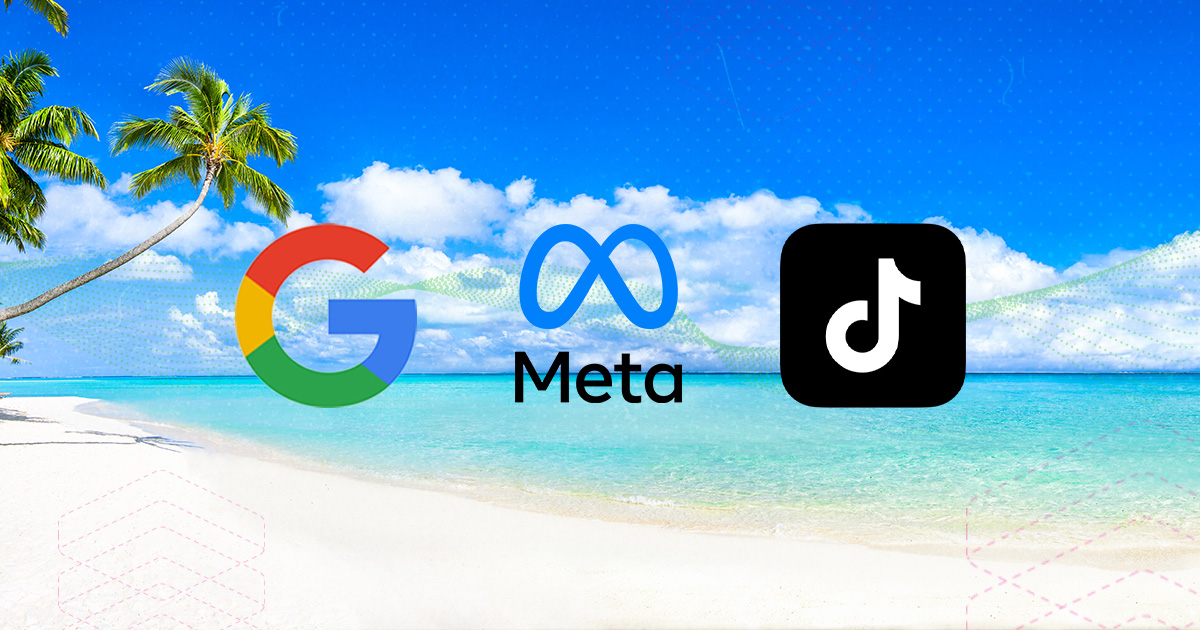
Two months ago we wrote about how TikTok, Meta and Google were reshaping travel advertising. Since then, none of the big themes have reversed. Several have simply accelerated fast enough that parts of that analysis are already outdated.
Here's what's changed since June, and what it means for how you plan the rest of the year.
Google: AI Mode hotel booking goes live
In June, the story was Google's expansion of AI Max into travel-specific formats, alongside the growing role of ads inside AI Overviews and AI Mode. That's still important, but Google is now moving from broad experimentation towards commercial partner integrations within the AI-assisted planning conversation.
In late August, it went further, moving hotel booking in AI Mode from a limited test to a full launch for users in the United States. Travellers can now compare hotels and complete a booking without leaving AI Mode, paying through Google Pay while the hotel or OTA remains the merchant of record. Launch partners include Booking.com, Expedia, Hilton, Marriott, IHG, Choice, Wyndham, Priceline, Hotels.com and Trip.com, and Google has said more partners and markets will follow.
On its Q2 2026 earnings call, Google named IHG Hotels & Resorts as an upcoming partner for its Direct Offers programme, meaning IHG is expected to surface special offers during trip planning in AI Mode rather than waiting for travellers to reach a traditional search results page.
For Direct Offers, Google is yet to confirm which markets will go first, which IHG brands will participate, or whether the arrangement is exclusive. In its half-year results in August, IHG confirmed it's part of two related Google programmes: Direct Offers, and Google's agentic booking programme, which lets guests complete an IHG hotel booking without leaving AI Mode, processed as a direct booking, with an option to redirect to IHG's own site for loyalty rates. Direct Offers and AI Mode booking aren't the same thing. One surfaces a promotion, the other completes the transaction, but together they show Google closing the gap between the two faster than expected.
Alongside this, Google has introduced Highlighted Answers, a format that places clearly labelled sponsored links within AI Mode's generated lists. First shown at Google Marketing Live in May, Google said on its Q2 earnings call that the format was showing early user traction, although its broader availability and scale remain unclear.
What this means for travel brands: the clean feeds, structured data and accurate pricing advice from our previous update hasn't changed. If anything, it matters more. Direct Offers follows the same broad principle: advertisers provide structured offer information and Google's AI determines when it is relevant to surface.
Hotel groups and travel retailers that haven't already audited their feed quality and offer structure now have a genuinely commercial reason to do so before the programme expands further.
AI Mode booking raises the stakes further. Direct Offers is about being seen; AI Mode booking is about being transacted through. For hotel groups and travel retailers not yet named as partners, the near-term question isn't only feed quality. It's whether there's a route into the programme at all, and what leverage looks like for brands that aren't Marriott- or IHG-sized when Google decides who's included next.
Meta: the fee that hits your margin, not your dashboard
This is the one worth flagging loudest. The invoice total can increase through a separate location-fee charge, even when the campaign metrics in Ads Manager appear unchanged.
Meta's location-based fees, announced in March, went live on 1 July 2026 and apply to ads delivered into six markets: the UK at 2%; France, Italy and Spain at 3%; and Austria and Türkiye at 5%. The fee is based on where the ad is delivered, not where the advertiser is based, so a UK or US travel brand advertising into France pays the French rate regardless of where the campaign is managed.
If your Q3 and Q4 media plans for those markets were built on pre-July costings, they are already slightly wrong.
Separately, Meta retired a substantial set of legacy Facebook Page Insights reach and impression metrics via its Graph API in June 2026, replacing them with newer media-view and viewer-based measures where Meta provides replacements. These are not universally one-for-one, so brands and agencies using third-party social reporting tools should avoid treating Page analytics from before and after the change as directly comparable.
What this means for travel brands: reforecast live budgets against the new location fees now. Separately, review any dashboards that draw on Facebook Page Insights data and clearly mark the June methodology break before making month-on-month comparisons.
TikTok: fewer reasons left to leave the app
TikTok's booking ambitions were already well underway before our June piece; we simply under-covered them. The bigger point still holds: the platform is steadily building a travel-discovery and booking layer, initially for users in the United States, and each component removes another reason for a traveller to leave TikTok before booking.
TikTok GO launched with six named travel partners for users in the United States: Booking.com, Expedia, Viator, GetYourGuide, Tiqets and Trip.com, although our June piece named only the first four. TikTok has also integrated its Dreamina Seedance 2.0 AI video model into TikTok Symphony, extending AI further into creative production, not only the targeting and matching covered in our previous update.
What this means for travel brands: TikTok is no longer simply a discovery channel. With a fuller booking ecosystem than our original piece captured, and AI embedded more deeply into campaign creation, it is moving beyond discovery toward becoming a commerce platform in its own right. Travel marketers still planning it purely as an awareness channel risk underestimating what the platform is becoming.
The bigger picture, updated
None of these updates exist in isolation. Google has now brought discovery, planning and booking together within a single AI experience, at least for US hotels. TikTok is bringing inspiration and booking closer together within the app. Even Meta's changes this quarter are less about targeting than the economics of distribution. That's our reading of the pattern, not a claim any of the three companies has made in these terms.
But the direction across their recent earnings commentary, product announcements and commercial changes is hard to miss: these platforms are becoming commerce infrastructure, not simply advertising channels. Google and TikTok are using travel as a prominent category in that shift, while Meta's changes show how the economics and measurement of distribution are also changing.
"The individual announcements matter, but the pattern matters more. Every major platform is moving closer to owning the journey from inspiration to transaction. That changes what travel marketers need to optimise for — and it means the assumptions behind your paid media strategy need revisiting far more often than they did even a year ago," says John Gonzalez, Paid Media Lead at Platform 195.
If there's one takeaway from the last two months, it's this: don't wait for an annual media review. Feed quality, reporting frameworks and budget assumptions now need quarterly health checks, because the platforms themselves are changing quarterly. The brands that adapt fastest won't necessarily be the ones with the biggest budgets. They'll be the ones that operationalise change fastest.
Keeping pace with platform change has become part of managing performance. Platform 195 helps OTAs, tour operators and airline holidays businesses navigate those changes across search, social and display. If you'd like to discuss what they mean for your paid media strategy, get in touch.
Ready to grow your brand?
Whether you're just starting out or looking to take your retail media and marketing to the next level, Platform 195 is here to help.

More case studies

.jpg)






Read more articles






.jpg)