Organic is for brand, paid is for performance. It's a tidy split but not a profitable one

Ask most travel marketing teams how organic and paid relate to each other and you'll get a version of the same answer. Organic builds the brand over time whilst paid drives the bookings now. It's intuitive, it keeps things organisationally tidy but it's fundamentally incorrect.
Paid can build brand equity just as powerfully as any content programme. Organic, done with intent, is one of the most effective performance tools available to a travel brand. Marketers that understand this, and build accordingly, don't just see better results from each channel, they see each channel make the other work harder. Meanwhile those that don't are missing a significant opportunity.
The problem with organic in travel
Travel has a structural challenge that most sectors don't. OTAs, tour operators, cruise lines, in fact most travel retailers, are frequently selling the exact same product, the same resort, the same hotel, the same cabin category, as five or ten competitors.
In this scenario, differentiation can't live in the product. Instead, it comes down to the story your marketing tells and how you make a traveller feel long before they're ready to book.
That's the real job of organic, not just filling a content calendar or hitting a posting frequency. It's about building a relationship with the traveller across the months between the first spark of inspiration and the moment they hand over their card details.
"Organic is your shop window. If someone walks past and nothing resonates, the opportunity is gone. The brands that do it well have a clear business objective front of mind, they're not just making noise," says Dan Jenkins, Head of Client Services at Platform 195.
The brands that do it badly treat organic as a cheap channel and give it proportionally cheap strategic attention. The result is what Dan calls "wallpaper content", it’s visually present but emotionally absent. A post that does nothing to shift where a brand sits in a traveller's mind. Pretty to look at but easy to scroll past.
One more thing worth stating clearly: organic isn't free. It doesn't carry a media cost, but it demands time, resource and consistent creative effort. The investment is just a different kind and it needs to be treated as such, with the same rigour and strategic intent you'd bring to a paid campaign.
The practical difference between brands that get organic right and those that don't is a coherent, joined-up channel strategy. Typically this might include:
- short-form social that creates emotional connection without needing to sell;
- longer-form YouTube content that mirrors the research a traveller is already doing and puts your brand at the centre of it; and
- on-site content that earns trust and builds the SEO foundation that compounds quietly in the background.
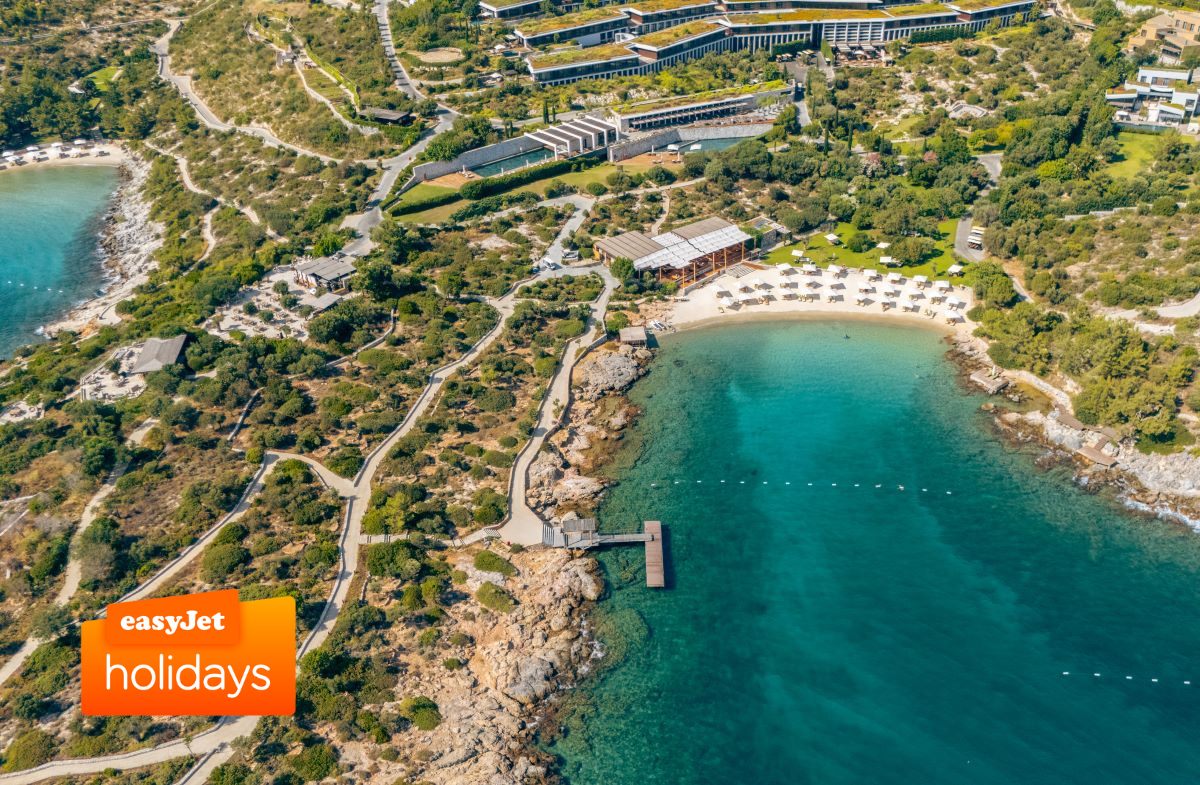
easyJet Holidays is a useful example of a brand that's got this right. Starting from a perception rooted in budget travel, cheap flights, cheerful but not aspirational, they've used a deliberately layered organic approach to actively shift how travellers see them.
Conversational, playful short-form content on social sits alongside hotel walkthroughs and destination storytelling on YouTube, with each channel playing a distinct role. The result is a brand that feels alive and considered, not just visible. Importantly, none of that requires you to know who built it. You can see it working.
Why organic has become more urgent, not less
Here's the part that should sharpen the attention of any travel CMO, the argument for investing in organic has never been stronger, because the cost of neglecting it has never been higher.
AI-powered search, Google's AI Overviews, ChatGPT, Perplexity, Claude, is rapidly changing how travellers discover and research holidays. The brands that appear in those AI-generated answers are the ones with the richest, most authoritative, most consistently published content ecosystems.
The brands that have been running on thin content and paid dependency are the ones that won't appear at all.
This reframes the classic objection to organic investment — that it takes too long to show results — entirely. The right question isn't whether organic will pay off in the next quarter. It's whether your brand will be findable at all in the AI-driven search landscape that's arriving in the next 12 to 18 months. The window to build that foundation is open now but it won't stay open indefinitely.
For a deeper dive on what this means specifically for travel brands, read our piece on how travel brands can prepare for AI-driven search. Or to understand the broader forces reshaping how travellers discover and book, download our commerce marketing playbook.
The misconception about paid
The parallel mistake on the paid side is treating it as a bottom-funnel conversion tool — something to switch on when you need bookings, pointed squarely at people who are close to buying. According to Dan, paid is very much full funnel, but how you pull the paid lever depends on what you are trying to do.
"Paid gives you speed and scale that organic can't match but it still works across the whole funnel. The storytelling has to run through all of it, whether you're driving awareness or conversions," explains Dan.
That last point is where a lot of travel brands leave performance on the table. A traveller who has no emotional relationship with your brand is not going to convert from a price-led ad, however well targeted. The desire has to already exist, or be created in the moment. Which is why the most effective paid programmes in travel don't separate inspiration from performance — they build both into the same ecosystem.
In practice that means running destination inspiration and hotel storytelling content alongside price-led conversion ads, not instead of them. The mix delivers returns that a purely sales-led approach never will.
The 'flip' and why it matters for where you are now
One of the most useful frameworks for thinking about organic and paid in travel is understanding that the relationship between them isn't fixed. It changes depending on where a brand is in its growth journey, and getting the sequencing right matters.
For a new travel brand, or one entering a new market, paid might come first. It builds the awareness and community that organic content needs to take hold. Without reach, even brilliant content goes nowhere. Paid creates the audience whilst organic gives them a reason to stay.
For an established brand with a loyal following, it flips. Sustained organic investment builds a community that amplifies paid activity far beyond what the spend alone could achieve. In travel, fewer brands have reached this point deliberately than you might expect — but those that have find that paid works more efficiently because awareness, desire and consideration are already in place before the campaign even launches.
"For a new brand, you use paid to accelerate organic. Once you're established, organic accelerates paid. The direction reverses but both are always in play," notes Dan.
Knowing which phase you're in, and investing accordingly, is one of the clearest strategic advantages available to a travel marketing leader. Most brands never ask the question explicitly. They just do both, in roughly equal measure, and wonder why neither feels like enough.
The integration gap
The most common failure mode isn't choosing the wrong channel. It's running organic and paid as parallel programmes that never really talk to each other — different teams, different agency relationships, different KPIs, optimising independently and occasionally competing for the same budget.
"The stronger your organic programme, the better your paid will perform, and vice versa. But even when both sit in the same team, they're often treated as completely disconnected. That's where brands lose," says Dan.
The fix starts with a shared brief and shared outcomes, not just channel metrics. Creative built for organic informs paid. Paid data reveals which organic themes are resonating enough to amplify.
It's also worth remembering that paid can be used to accelerate organic directly, boosting content beyond your existing network to drive followers and build reach faster than organic alone ever could. The two should be designed together, from the same brand positioning, pointing at the same north star.
"Without that clarity organic becomes content for content's sake and paid becomes spend for spend's sake. Neither one delivers what it's capable of,” concludes Dan.
If you're not sure whether your organic and paid programmes are set up to work together — or you want to think through the right balance for where your brand is right now — talk to the team at Platform 195.
We work with OTAs, tour operators, cruise lines and travel retailers to build commerce marketing strategies that connect organic and paid into a single, high-performing system.
Not ready to talk yet? Download our commerce marketing playbook for a deeper look at the forces reshaping travel marketing and what a modern marketing engine looks like in practice.
Ready to grow your brand?
Whether you're just starting out or looking to take your retail media and marketing to the next level, Platform 195 is here to help.

More case studies

.jpg)







Read more articles





.jpg)