Airlines. Are you actually ready for retail media?

Retail media has been lurking on the fringes of the airline commercial conversation for years. Interesting and potentially valuable, but rarely urgent enough to become a serious commercial priority.
That is starting to change.
Pressure on ancillary revenue, major connectivity investments, and the growing maturity of retail media across travel have pushed the topic much closer to the centre of the commercial agenda. Airlines are increasingly being asked what role media, audience monetisation, and first-party data could play in future revenue growth.
Most airlines can already see where the opportunity sits. The harder part is building something commercially robust enough to survive beyond the first few campaigns.
“Most airlines already have many of the ingredients in place — valuable audiences, loyalty ecosystems, high-frequency customer touchpoints and increasingly connected passenger journeys. The challenge is turning those assets into a commercial proposition that can scale beyond isolated campaigns,” says Stuart Adamson, CEO & Founder, Platform 195.
The following questions are less about determining whether retail media is possible and more about understanding where friction is likely to emerge once the conversation becomes operational.
01. Who actually owns retail media in your organisation — and are they empowered to act?
This is the question that tends to expose the biggest disconnects internally. Loyalty, e-commerce, onboard experience, marketing, and ancillary revenue teams all sit close to part of the opportunity, but in many airlines nobody has clear responsibility for bringing those parts together commercially.
That becomes a problem quickly. Retail media programmes often begin with momentum inside a single department, then struggle to scale because ownership, governance and commercial accountability were never properly established upfront.
Most airlines already have the channels, audiences and inventory. Coordinating them into something commercially coherent is where the complexity starts to appear.
02. Are you selling ad placements or selling audiences?
Selling a banner placement on a Wi-Fi portal or confirmation email can generate incremental revenue, but those opportunities tend to plateau fairly quickly because the amount of owned inventory is finite.
The more commercially mature airline strategies are moving beyond individual placements and toward audience products advertisers can activate across multiple environments and touchpoints. A business traveller flying long-haul routes regularly, for example, has far more value commercially than any single impression attached to them.
That shift shapes almost every decision that follows; data strategy, measurement, partnerships, technology investment and sales capability included.
03. Does your loyalty programme talk to your media team?
Loyalty data remains one of the most commercially valuable first-party assets airlines possess. It is persistent, high-intent, high-frequency and connected to real purchasing behaviour across the travel journey.
Yet in many organisations, the teams responsible for loyalty and the teams exploring retail media still operate separately, with different objectives, commercial models and priorities.
The challenge is rarely access to data itself. More often, it is the absence of shared commercial thinking around how that data can be activated in ways advertisers will value and passengers will accept.
Even limited alignment between those teams tends to unlock progress far faster than additional tooling alone.
04. What is your plan for data privacy and consent and is it a prerequisite or an afterthought?
Privacy and consent frameworks are still one of the biggest areas of hesitation for airlines exploring retail media more seriously, particularly when customer identity and passenger data sit at the centre of the proposition.
The airlines making the fastest progress tend to address those questions early. Consent architecture, data governance, and compliance considerations become part of the commercial planning process from the outset rather than something revisited later once campaigns are already being discussed.
That matters even more when large parts of the passenger journey still sit outside logged-in environments. Without a clear and scalable approach to consent, audience activation quickly becomes more limited than many organisations initially expect.
05. What does your connectivity investment need to return and have you modelled the media contribution?
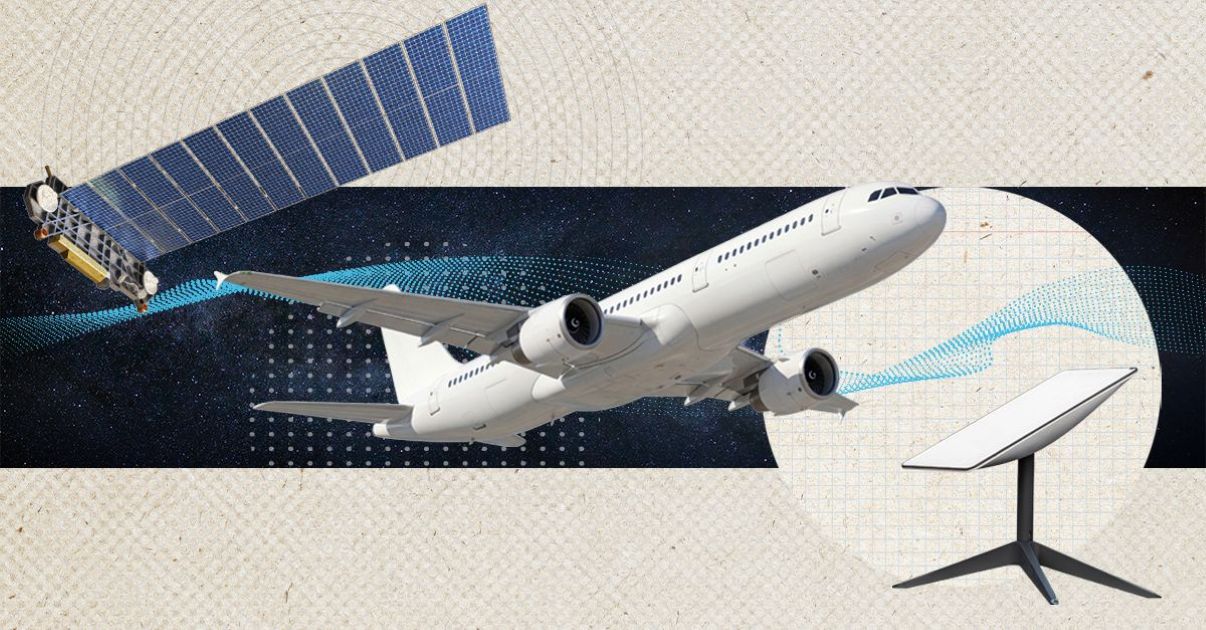
For airlines investing heavily in satellite connectivity, the commercial implications are becoming harder to ignore.
The infrastructure investment is substantial, and while the passenger experience upside matters, it can be difficult to tie directly back to revenue performance on its own. Media monetisation is increasingly becoming part of the broader commercial justification, particularly as connected aircraft create entirely new advertising environments during the travel journey itself.
In several conversations we’ve had this year, however, the media opportunity had barely been modelled when the original connectivity business case was being discussed.
“Connectivity is creating an entirely new advertising environment for airlines. The commercial upside becomes much harder to realise later if media is treated as an afterthought once the infrastructure decisions have already been made,” says Stuart.
06. Do you have the sales capability to actually sell what you're building?
One of the biggest surprises for airlines approaching launch is how quickly the conversation shifts from technology to commercial execution.
Having audience data and available inventory does not automatically create advertiser demand. Someone still needs to package the proposition, position it properly in market, manage relationships and build repeatable revenue.
This is often where progress slows. The infrastructure may already exist, campaigns may even be technically possible, but without a clear sales model the programme struggles to move beyond isolated activity.
There are multiple routes available, internal teams, outsourced sales support, hybrid structures and strategic partnerships but the decision deserves more consideration than simply choosing the fastest option available at launch.
07. Are your existing commercial partnerships capping your media revenue?
This question rarely appears early in retail media discussions, but it has the potential to create major limitations later.
Many airlines already have longstanding agreements in place with hotel groups, OTAs, financial services providers and ancillary partners that include exclusivity clauses or category protections. In some cases, those agreements may already restrict access to some of the most commercially attractive advertiser categories before the retail media proposition has even launched.
Reviewing those relationships against future media ambitions is unlikely to be the most exciting part of the process, but overlooking them creates problems that are far more difficult to resolve once advertisers are already in market.
08. Have you been oversold on what retail media can deliver and has that made you too cautious?
The scale of some retail media revenue projections over the past few years has understandably created scepticism across parts of the airline sector.
Some organisations have seen ambitious forecasts attached to immature programmes, only for commercial delivery to fall well short once the operational realities became clearer. That has left some leadership teams wary of overcommitting too early.
The challenge comes when scepticism prevents airlines from testing commercially realistic opportunities that could generate valuable learning early. The strongest programmes tend to begin with tightly scoped commercial pilots, clear advertiser outcomes and realistic expectations around what success looks like in the early stages.
Where are the real gaps?
Most airlines are already further into the retail media conversation than they sometimes realise. The challenge is that progress rarely happens evenly across the organisation.
Some teams may already have strong audience data, existing advertiser relationships or mature loyalty infrastructure in place, while other parts of the business are still working through governance, compliance or commercial ownership questions. That unevenness is normal.
The more useful exercise is understanding where friction is likely to appear once retail media moves from strategy discussion into operational reality.
For example:
- Is there clear ownership internally, with enough authority to move the programme forward?
- Are you building commercially valuable audience products, or primarily monetising isolated inventory?
- Can loyalty data realistically be activated in a compliant and scalable way?
- Has connectivity monetisation been properly modelled as part of the broader commercial case?
- Do you have a credible route to market once advertisers begin asking how campaigns will actually be bought and managed?
- Could historic commercial agreements already be limiting parts of the opportunity before launch?
The airlines making the most progress tend to be the ones identifying those constraints early, while there is still time to solve them properly.
What happens next?
Retail media is becoming a much more serious commercial conversation within aviation, but the airlines likely to build meaningful long-term revenue from it will not necessarily be the ones with the largest audiences or the most available inventory.
In practice, the programmes that scale tend to come from organisations that address the operational questions early — ownership, sales capability, commercial structure, data governance, advertiser access and how media fits into the wider business commercially.
That work is already underway across the sector.
The important thing now is not launching quickly for the sake of momentum. It is understanding what kind of media business you are trying to build, what advertisers will realistically value, and whether the organisation around it is structured to support that ambition once the first campaigns go live.
Because building a scalable retail media business is considerably more complex than simply making media inventory available.
If those conversations are already starting internally, we’re always happy to discuss what that journey is beginning to look like across the wider travel market.
Ready to grow your brand?
Whether you're just starting out or looking to take your retail media and marketing to the next level, Platform 195 is here to help.

More case studies

.jpg)








Read more articles






.jpg)